JUL
Norwegians celebrate Christmas on the 24th, julaften. Shops close early, and Christmas is traditionally rung in by the church bells at 5PM. Norwegian families gather for Christmas dinner. Here traditions vary, in earlier times mainly dependent on the area one resided, nowadays partly by family tradition and partly by personal preference. After dinner, gifts are opened and many families with children dance hand in hand round the Christmas tree, singing fun Christmas songs. Julenissen (Santa Claus) may then drop in for a visit. Christmas Day (1. juledag) is traditionally a day of relaxing at home with family or close friends.
JULEGRØT (rice porridge)
Porridge made of barley or oats was common everyday food for the working classes in older times. More luxurious porridges were made of thick, soured cream and fine wheat flour (rømmegrøt), and rice (risengrynsgrøt) for special occasions. The latter is often served at Christmas, usually on the 23rd or 24th. It is a thick, warm, creamy pudding made of milk and round-grained rice, with a dash of salt. A knob of butter is placed on top and the bowl of grøt is sprinkled with sugar and cinnamon.
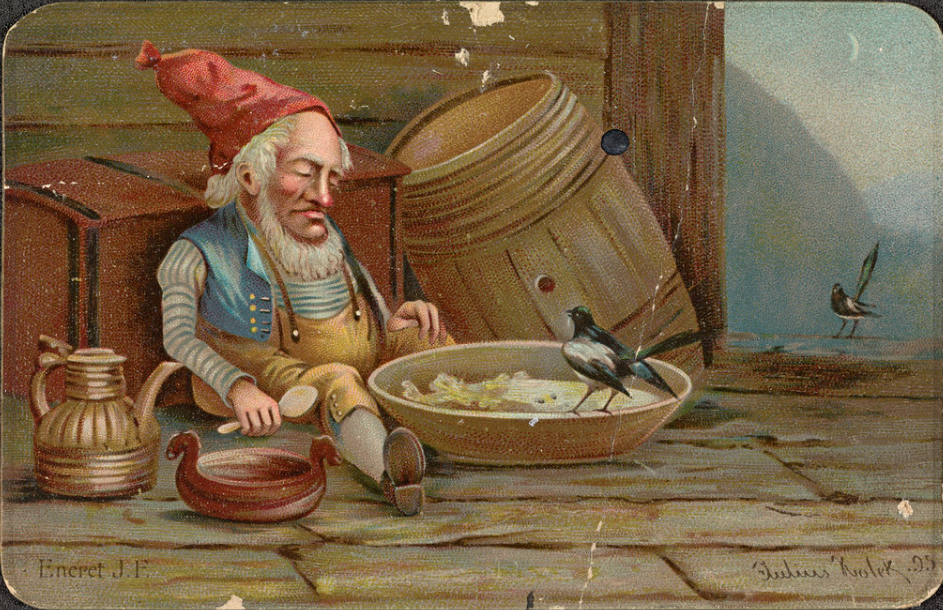
In the old days it was part of rural Christmas tradition in Norway to put out a bowl of julegrøt for the fjøsnisse, portrayed as a gnome-like figure with a long red cap. This was supposed to make the nisse happy and prevent him from causing mischief. The same word, nisse, is used in Norway of Santa Claus, julenisse. There is a tradition of putting a blanched almond in the rice porridge, the person who gets the almond wins a marzipan pig, or similar small treat. Left-over porridge is used to make riskrem (literally rice-cream, see DESSERT), and the same tradition with the almond is often used with this dessert.
DINNER
Dinner favorites are:
- Roasted pork ribs (ribbe) with crispy crackling, which is usually served with Christmas sausage and pork meatballs (julepølse og medisterkaker). Good potatoes, gravy and Norwegian sauerkraut are the most common side dishes, though other vegetables may be served.
- Cured lamb ribs (pinnekjøtt) which may be smoked or unsmoked. The ribs have been salted and dried and must be soaked before use. A special sausage called vossakorv is often served with it. Good potatoes and rutabaga mash are obligatory accompaniments.
- Cod or the well-known lutefisk are served by many. Lutefisk is dried cod which has been cured in a lye solution. When cooked it has a slightly jelly-like consistency. It is often served with cubes of fried bacon and bacon fat on top, potatoes, mushy green peas and vegetables. Lutefisk has been much-maligned and there are songs and jokes galore about this dish in the Mid-West.
Turkey has also become popular in recent years.
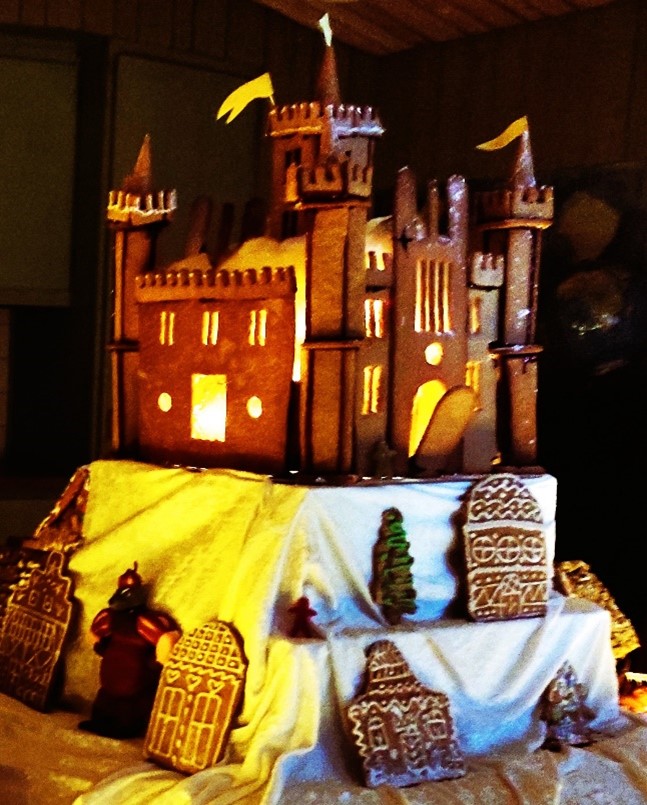
Photo: Margaret Strand
DESSERT
Dessert may be riskrem, made from cold rice porridge mixed with whipped cream, sugar and vanilla essence. It is served chilled with rødsaus, a sauce made from red berries such as strawberries, raspberries or cherries. Some like caramel pudding or multekrem, cloudberries mixed with sugar and whipped cream.
COOKIES
Cookies are more traditional in Norway than Christmas cake, and here there are many varieties to choose from. In times past a housewife would pride herself on having at least seven kinds of cookie, though modern working women often opt for fewer or purchase commercially produced cookies in shops or home-made ones sold at the popular Christmas markets.
Some popular Christmas cookies are:
Photo: M. Strand
- Goro (rectangular) and krumkaker (cone-shaped) are both baked in special irons.
- Smultringer (donut, fried in oil) and a similar but crisper donut called hjortetakk.
- Pepperkaker are gingerbread biscuits in miscellaneous shapes, and gingerbread houses pepperkakehus decorated with icing and sweets are also popular with children.
- Serinakaker, butter cookies with pearl sugar sprinkled on top.
- Sirupsnipper, diamond-shaped, spiced syrup cookies with a slice of almond on top.
- Coconut macaroons (kokosmakroner)
- Havreflarn are crunchy, flat, round cookies made of oat flakes.
- Kransekake, almond rings stacked into a tower, often decorated with tiny Norwegian flags and miniature crackers.
- Fattigmann (literally “poor man”) a rich dough cooked in oil. They have a special knotted shape.
- Sandkaker (sandbakelse) are made from ground almonds, and the dough is pressed into small, fluted tins before they are baked, to give them their characteristic shape. They are good on their own but may also be filled with berries and whipped cream.
BAKED WITH YEAST
Lusekatter are buns made from a sweet yeast dough containing saffron, and formed into special shapes. They are served on December 13th, Luciadagen, though this is a relatively modern tradition in Norway.
Julekake (literally Christmas cake) is not a cake but a large, sweet yeast loaf with cardamom and raisins. It is sliced and spread with butter and some like Norwegian brown cheese (brunost, a sweetish cheese made from whey) on top.
LEFSE
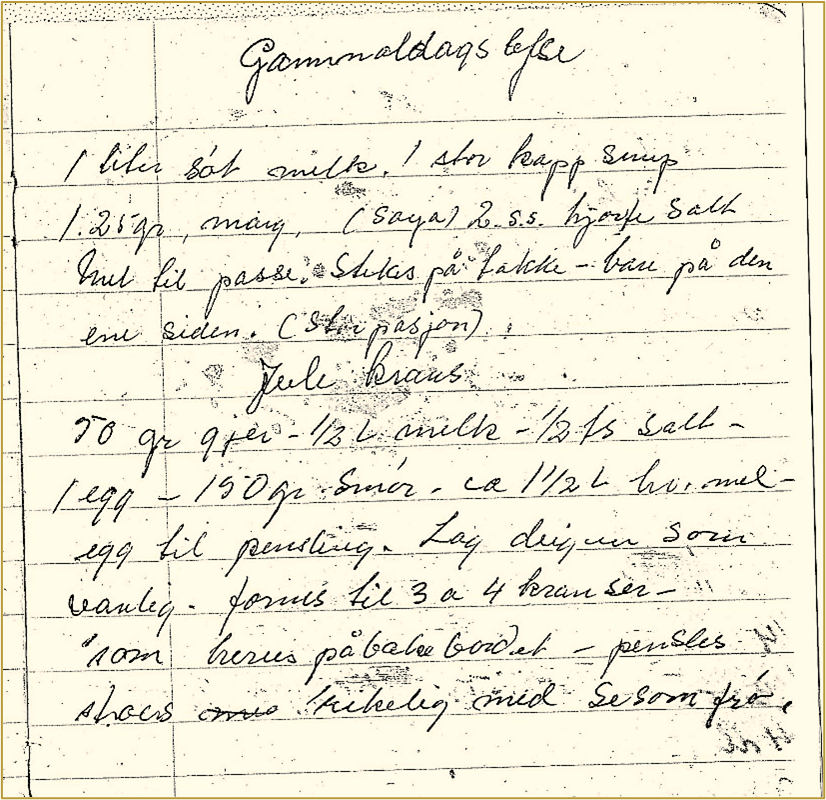
Lefse (flat cakes or flatbread resembling tortillas, baked on a griddle) are traditional not only at Christmas but for festivities at any time of year. There are many types, some containing mashed potato as well as flour. Some lefse are dry and will therefore keep for a long time. They are then softened before use by placing them in between layers of moist kitchen towels for an hour or two. Lefse are often served with a spread of butter, sugar and sometimes cinnamon too. They may then be rolled up or folded and cut into pieces before serving. They are sometimes served with savory fillings too. In some areas, large lefse are warmed in a frying pan with a sticky, sweet sauce of milk, brown cheese and syrup (møsbrømlefse). A spoonful of soured cream may be served on top of this delicacy.
Liv and Margaret wish you all a Merry Christmas! God jul!
Do you want to learn more about your Norwegian roots? Read and learn from our book Exploring Norwegian Genealogy. You can buy it as an ebook too.
 Genealogical research in Norway